01
Make the beginning smaller.
A new project can become so large in your mind that you never find the right moment to start. Bring it back to a scale that fits inside today: one page, one message, one sketch or one decision.
Open a notebook. Clear one corner of a table. Write the first sentence without deciding whether it is good. A beginning does not need to be impressive to be real.
02
Name the next visible action.
“Work on the project” is difficult to begin because it hides many actions. Replace it with something your hands can do: open the source file, list three questions, photograph the sample, or schedule twenty minutes with the right person.
Write the action as a verb and remove anything that belongs to a later stage. The point is not to finish everything; it is to create a clean edge where movement can start.
03
Give it ten quiet minutes.
Set aside a short stretch of time and give it to this one thing. Put the phone somewhere you cannot see it. Leave the question of what happens next until the ten minutes are over.
In the language of the five elements, Wood offers an image of growth and direction. Here, let it stand for something gentle and specific: making a little space for what is ready to begin.
04
Use an object as a cue.
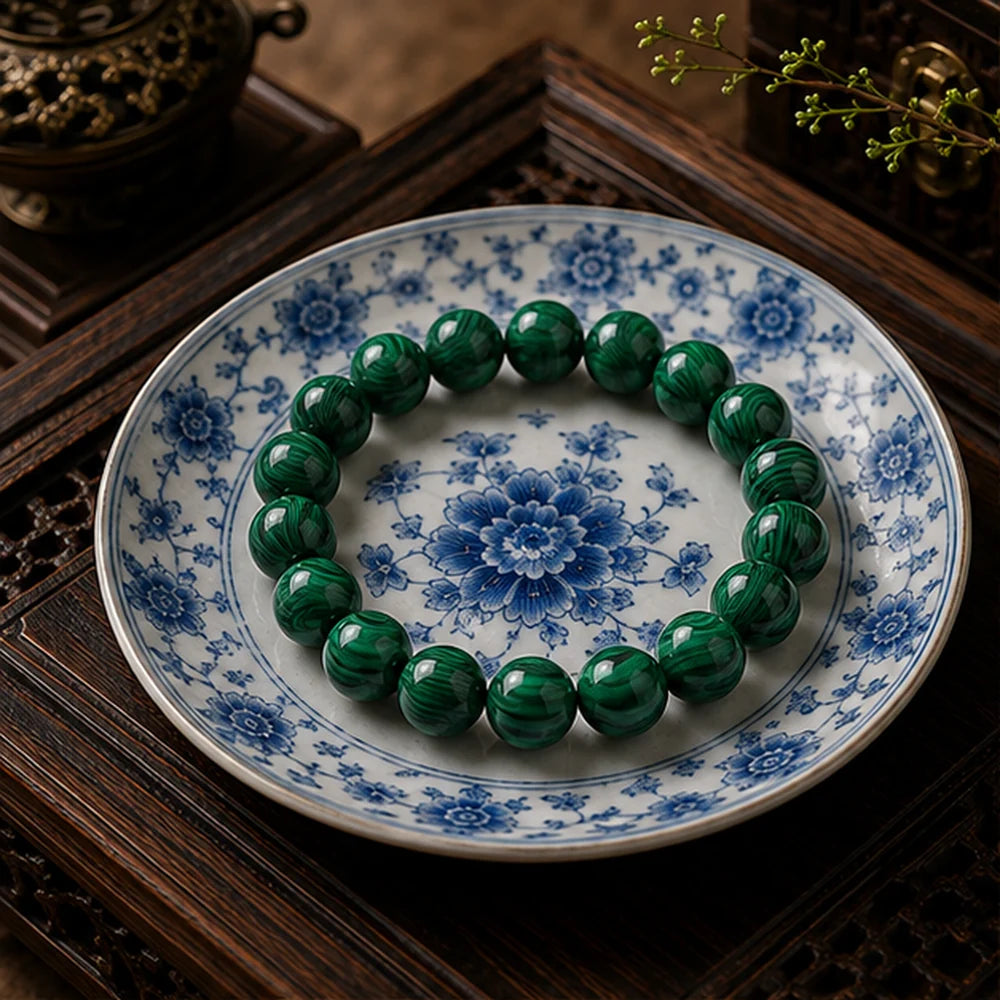
Place a notebook, a bracelet or another familiar object beside the work. Its job is simply to remind you of the action you chose. It does not create the result and it does not need a supernatural explanation.
If green malachite or moss tones make the idea memorable, use them. If a plain card works better, use that. A ritual earns its place by helping you return, not by looking impressive.
05
Leave a sign for tomorrow.
Before you stop, write down the smallest next step and put the materials where you can find them. Record what made starting easier and what interrupted you.
Return on another day for the same ten minutes. Growth is easier to notice as a sequence of small, repeatable actions than as one dramatic moment.