01
Let your eye linger.
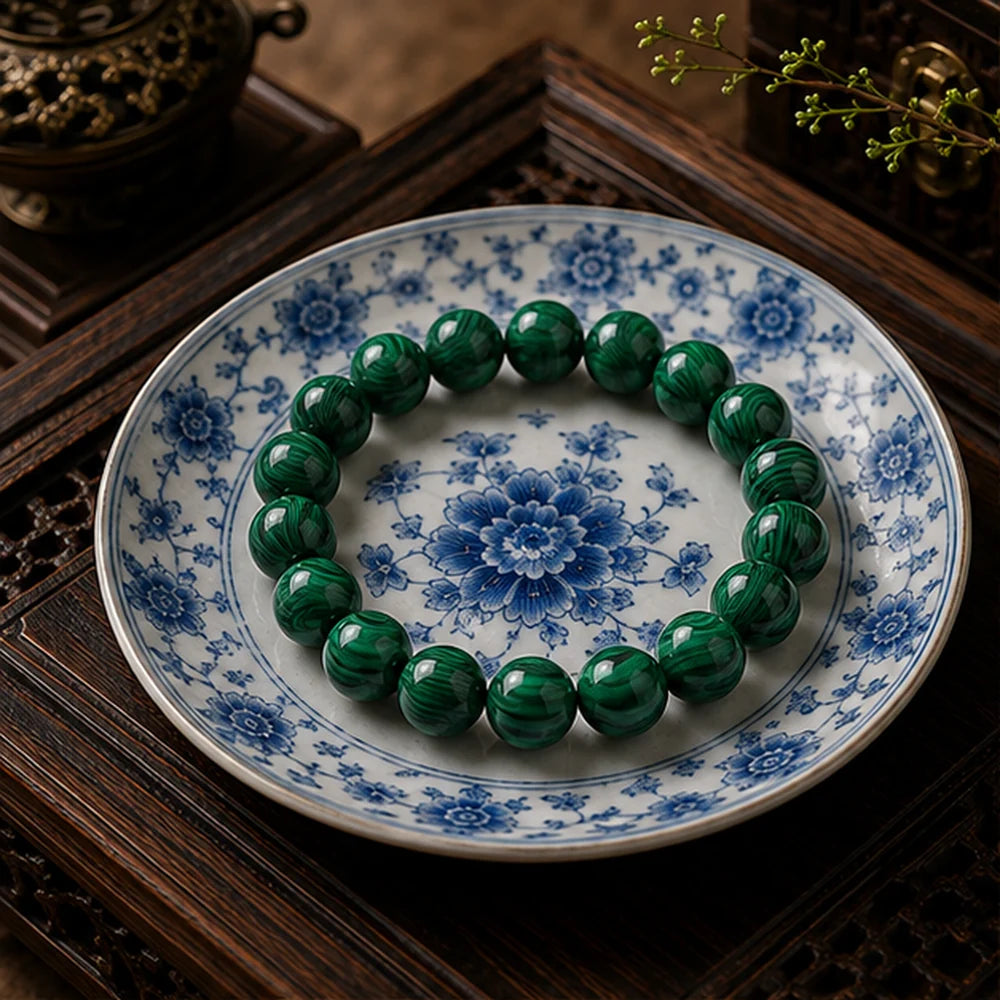
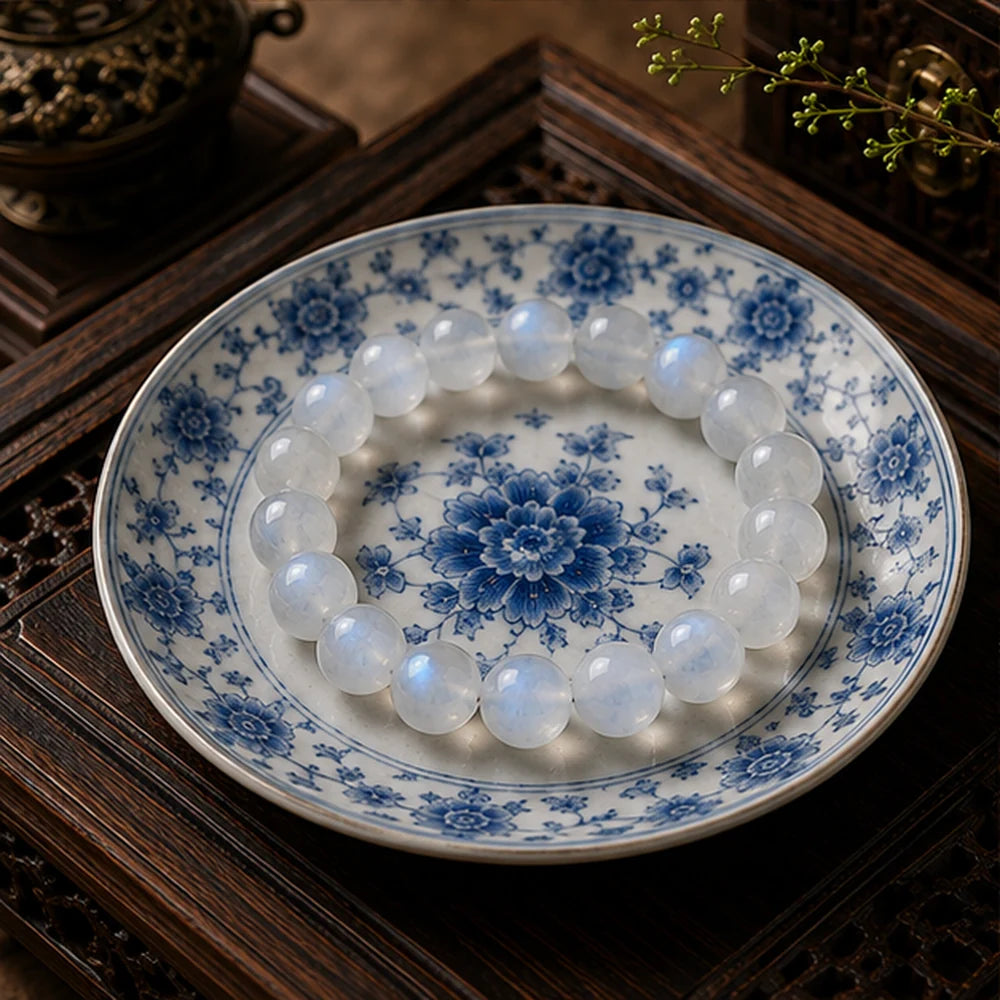
Before reading what a stone is associated with, look at the object itself. Is it the clear light of quartz that draws you in, the deep green lines of malachite, the blue variation of aquamarine or the simplicity of a dark polished bead?
Notice whether you prefer an even colour or visible variation, something translucent or opaque, a quiet neutral or a stronger accent. Your first response is a perfectly good place to begin. A piece you enjoy seeing is more likely to become part of your day.
02
Read the listing like a record.
A complete product page should name the material in plain words and state known treatments, bead dimensions, bracelet construction, wrist-fit range, weight where useful and what natural variation to expect. Several images should show the same sample in neutral light.
Origin and sourcing deserve the same care. A broad phrase such as “authentic” or “ethical” is not enough on its own; the final store needs supplier or batch information behind the claim. Those records have not yet been supplied for this Demo.
03
Put fit before symbolism.
Measure the part of your wrist where the bracelet will sit and compare it with the maker’s stated fit method. Bead size changes the visual weight of a bracelet, while cord, clasp and construction affect how it feels and how it should be handled.
The current preview does not publish measurements because none were provided. Use the enquiry link on a piece to prepare the exact questions you would want answered before ordering.
04
Choose a meaning you can use.
A stone can stand for something ordinary and specific: taking a proper lunch break, finishing one thing before beginning the next, or making time for someone you care about. An intention works best when it points toward an action.
The five-element edits offer another way into the collection. Let a colour or a word prompt a thought, then decide for yourself whether it belongs in your day.
05
Build a gentle care habit.
Handle a beaded piece gently, remove it before activities that might pull the construction, and keep it separately so harder surfaces do not rub against it. Cosmetics, household products, moisture, heat and strong light can affect different materials in different ways.
Because the exact stones and treatments are not verified here, the safest final advice must be material-specific rather than universal. Packaging should include a care card tied to the exact product record.
06
Make the decision slowly.
Save two or three pieces, return to their photographs and compare the information you can verify. Ask whether you like the object without the story attached, whether the fit is clear and whether the terms make sense.
If the answer is yes, the symbolic layer can remain a private prompt. If the listing cannot answer the practical questions, waiting is also a considered choice.